
When people think of the Mekong Delta, images of floating markets, winding waterways, coconut groves and peaceful riverside villages often come to mind. Yet beyond its famous landscapes lies another fascinating side of the region: the rich cultural heritage of the Khmer community.
For centuries, Khmer communities have been an important part of life in the Mekong Delta, particularly in the southern provinces of Vietnam. Their influence can be seen in the region’s distinctive Theravada Buddhist temples, traditional festivals, architecture, cuisine, music and everyday customs.
Exploring Khmer heritage offers travelers a different perspective on the Mekong Delta — one that goes beyond sightseeing and provides a closer look at the diverse cultures that have shaped southern Vietnam.
Who Are the Khmer People of the Mekong Delta?
The Khmer are one of Vietnam’s officially recognized ethnic groups, with a long history in the southern part of the country. A large proportion of Vietnam’s Khmer population lives in the Mekong Delta, especially in provinces such as Soc Trang, Tra Vinh and Kien Giang.
Their cultural identity is closely connected with Theravada Buddhism, traditional Khmer customs and a strong sense of community. Buddhist temples are not simply places of worship; they often serve as important cultural and educational centers where traditions are preserved and passed from one generation to the next.
This makes the Mekong Delta an especially interesting destination for travelers who want to discover the cultural diversity of Vietnam.
Khmer Temples: Architectural Treasures of the Delta
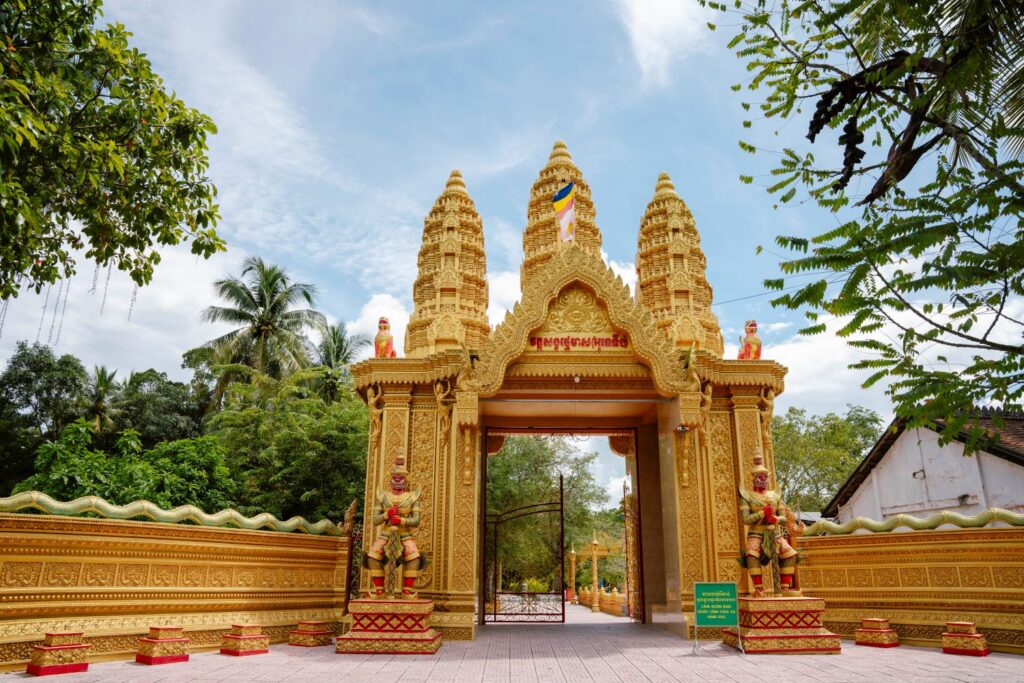
One of the most recognizable symbols of Khmer culture in the Mekong Delta is the Khmer temple, locally known as a wat.
Unlike many Vietnamese Buddhist pagodas, Khmer Theravada temples often feature colorful and highly decorative architecture inspired by Cambodian traditions. Golden details, elaborate roof decorations, mythical figures and intricate patterns create a distinctive visual identity.
Som Rong Pagoda in Soc Trang
Located in Soc Trang, Som Rong Pagoda is one of the most impressive Khmer Buddhist sites in the Mekong Delta.
The temple complex combines traditional Khmer architectural elements with a peaceful modern setting. Its large reclining Buddha statue has become one of the best-known sights in Soc Trang, while the temple itself remains an important place for Buddhist worship and community activities.
Visiting Som Rong offers travelers an opportunity to appreciate Khmer architecture while learning about the spiritual traditions of the local community.
Kh'leang Pagoda
Also located in Soc Trang, Kh'leang Pagoda is one of the oldest Khmer temples in the region.
Surrounded by greenery, the temple features traditional Khmer design with richly decorated roofs and colorful ornamental details. Its long history reflects the deep roots of Khmer culture in the Mekong Delta.
The peaceful atmosphere makes it a rewarding stop for travelers interested in history, architecture and local traditions.
Ang Pagoda in Tra Vinh
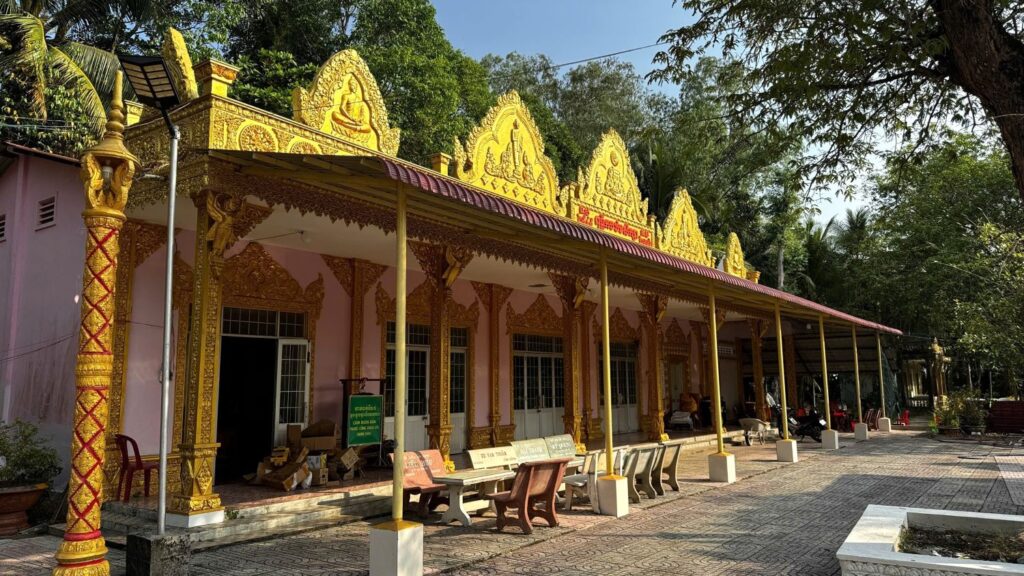
Tra Vinh is another important center of Khmer culture, home to numerous Khmer temples surrounded by lush tropical landscapes.
Ang Pagoda, located near Ba Om Pond, is among the most notable. The temple is closely associated with the cultural heritage of the Khmer community in Tra Vinh and forms part of an area where visitors can discover both natural scenery and religious traditions.
Festivals That Bring Khmer Culture to Life
Khmer traditions are particularly vibrant during traditional festivals. These celebrations combine religious ceremonies, community gatherings, traditional performances and local food.
Chol Chnam Thmay – Khmer New Year
Chol Chnam Thmay is the traditional Khmer New Year and is one of the most important celebrations of the year.
Usually taking place in April, the festival marks the beginning of a new year according to the traditional Khmer calendar. Families visit temples, make offerings, clean their homes and spend time together.
Water also plays an important role in the celebrations, symbolizing purification and a fresh beginning.
For visitors, the festival provides a unique opportunity to experience the warmth of Khmer community life and understand how spiritual traditions remain closely connected with everyday culture.
Ok Om Bok – The Moon Worship Festival
Ok Om Bok is another important Khmer festival in the Mekong Delta, particularly associated with Soc Trang and Tra Vinh.
The festival is traditionally dedicated to the Moon and expresses gratitude for a successful harvest. One of its most famous activities is the traditional Ngo boat race, in which long, colorful Khmer racing boats compete on the water.
The atmosphere can be energetic and festive, with crowds gathering to watch the races, enjoy traditional performances and taste local specialties.
Sene Dolta – A Time to Remember Ancestors
Sene Dolta is a traditional Khmer festival dedicated to remembering ancestors and expressing gratitude to previous generations.
Families prepare food and make offerings at temples and ancestral spaces. The festival highlights the importance of family, respect for elders and connections between generations.
It is a meaningful example of how spiritual beliefs and family values are woven together within Khmer culture.
Traditional Khmer Music and Performing Arts
Music and performance are another important part of Khmer cultural life in the Mekong Delta.
Traditional Khmer performances may feature distinctive instruments, rhythmic music and dances inspired by religious stories, legends and community life. During major festivals, temples and local cultural spaces can become lively gathering places where traditional performances bring generations together.
The cultural arts are not simply forms of entertainment. They also help preserve stories, beliefs and traditions that have been passed down through generations.
Khmer Cuisine in the Mekong Delta
Food provides another delicious way to discover Khmer heritage.
Khmer cuisine in the Mekong Delta shares ingredients with other regional cuisines but has its own flavors and culinary traditions. Fresh fish, freshwater produce, coconut milk, herbs and local vegetables are commonly used.
In areas with large Khmer communities, travelers may encounter dishes and cooking styles influenced by traditional Khmer cuisine. Some local specialties also reflect the cultural exchange that has taken place between Khmer, Vietnamese and Chinese communities across the Mekong Delta.
For food-loving travelers, exploring local markets and family-run eateries can be a simple but memorable way to experience this cultural diversity.
The Cultural Landscape of Soc Trang and Tra Vinh
If you want to explore Khmer heritage in the Mekong Delta, Soc Trang and Tra Vinh are two of the most interesting destinations.
Soc Trang is well known for its Khmer temples, colorful festivals and diverse local communities. The city and surrounding countryside provide opportunities to visit temples, discover traditional foods and experience local celebrations.
Tra Vinh, meanwhile, is famous for its peaceful atmosphere, tree-lined streets and numerous Khmer pagodas. The combination of temples, ponds, villages and tropical landscapes creates an especially distinctive cultural environment.
Rather than treating these places simply as sightseeing stops, travelers can take time to observe everyday life and appreciate the cultural traditions that continue to shape local communities.
How to Experience Khmer Culture Respectfully
When visiting Khmer temples, travelers should remember that these are living religious spaces rather than simply tourist attractions.
Dress modestly when entering temple grounds, keep noise to a minimum and follow local instructions regarding photography. If monks or worshippers are conducting ceremonies, give them space and avoid interrupting religious activities.
A respectful visit also means taking the time to learn about the culture instead of simply photographing the architecture.
A local guide can make a significant difference by explaining the meaning behind temple decorations, festivals, religious practices and local customs.
Why Khmer Heritage Adds Another Dimension to the Mekong Delta
The Mekong Delta is often described through its rivers and agricultural landscapes, but its cultural diversity is equally fascinating.
Khmer heritage reveals another layer of the region — one shaped by centuries of history, Buddhist traditions, community life and cultural exchange. From the golden roofs of Khmer temples to the excitement of traditional boat races and the flavors of local cuisine, these traditions remain an important part of southern Vietnam today.
For travelers exploring the Mekong Delta, discovering Khmer culture is more than visiting a few temples. It is an opportunity to understand the people, traditions and stories that make this region so culturally unique.
Whether you visit Soc Trang, explore the temples of Tra Vinh or happen to encounter a Khmer festival during your journey, this cultural side of the Mekong Delta can turn a scenic trip into a much deeper and more meaningful experience.
Discover the Khmer Heritage of the Mekong Delta
If you are planning a journey through southern Vietnam, consider adding Soc Trang or Tra Vinh to your Mekong Delta itinerary. Beyond the famous waterways and floating markets, these destinations offer a chance to discover the traditions, architecture and everyday life of the Khmer community.
The Mekong Delta is not just a place shaped by water — it is a cultural crossroads where different communities, histories and traditions continue to meet.