
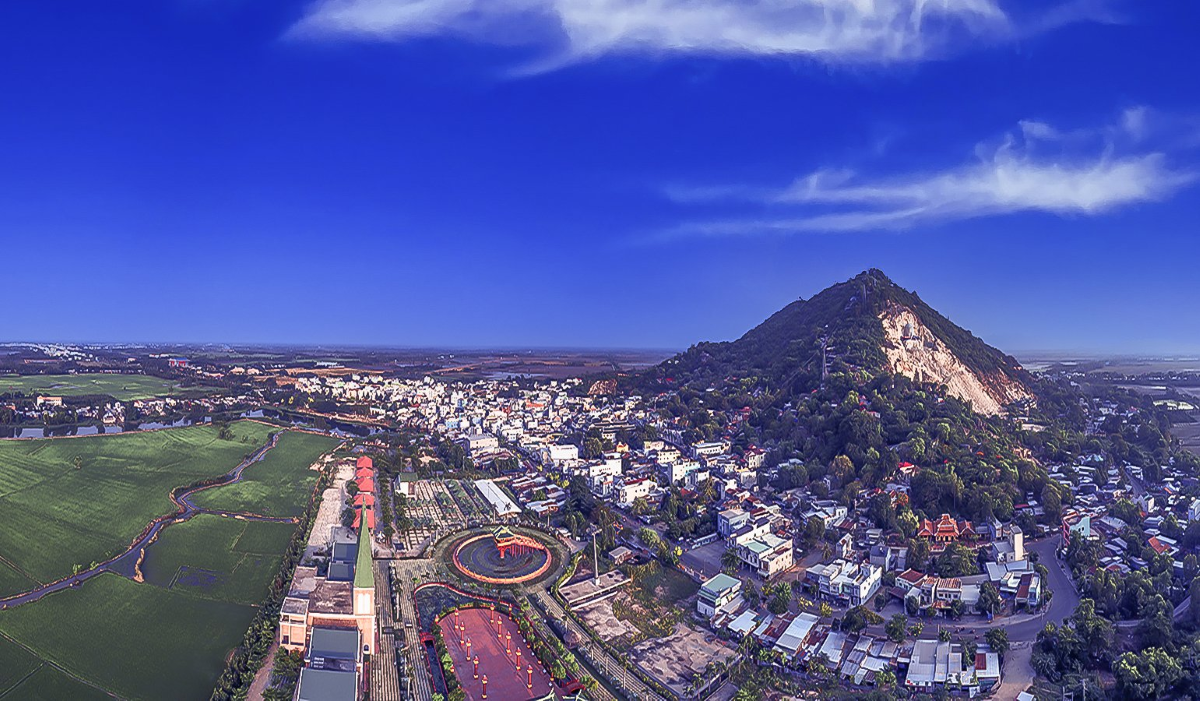
Rising from the flat landscape of the Mekong Delta, Sam Mountain is one of the most distinctive landmarks around Chau Doc, An Giang. At 228 metres above sea level, the mountain may not be particularly high, but its cultural and spiritual importance makes it one of the most interesting places to visit in the region.
The slopes and foothills of Sam Mountain are home to temples, pagodas, historic tombs and viewpoints overlooking the surrounding countryside. For travelers visiting Chau Doc, exploring Sam Mountain is a chance to see a different side of the Mekong Delta - one shaped not only by rivers and agriculture, but also by religion, history and local traditions.
Here is what to see around Sam Mountain and how to make the most of your visit.
Where Is Sam Mountain?
Sam Mountain is located just outside Chau Doc in An Giang, in the southwestern Mekong Delta. The area sits close to the Vietnamese-Cambodian border, with the Vinh Te Canal running along the western side of the mountain.
Unlike the flat rice fields that dominate much of the Mekong Delta, Sam Mountain rises prominently from the surrounding plain. From higher points on the mountain, visitors can look across rice fields, canals and rural villages.
The mountain is also an important pilgrimage destination. Around 200 religious sites, large and small, are found on its slopes and surrounding area, making temple visits an important part of the local experience.
1. Ba Chua Xu Temple
At the foot of Sam Mountain, Miếu Bà Chúa Xứ Núi Sam is the most famous religious site in the area.
The temple is dedicated to Ba Chua Xu, a revered local figure whose story is closely connected with Sam Mountain. According to local tradition, her stone statue was discovered on the mountain and later brought down to the foot of the mountain, where a shrine was established.
The temple is particularly lively during religious festivals, when pilgrims from different parts of southern Vietnam come to make offerings and pray.
For visitors, however, it is worth seeing even outside the festival period. The architecture, incense-filled atmosphere and steady flow of local worshippers provide an authentic glimpse into southern Vietnamese spiritual life.
Local tip: If you visit the temple, dress respectfully and avoid interrupting people who are praying or making offerings.
(Source: Lao Dong Newspaper)
2. Thoai Ngoc Hau Tomb
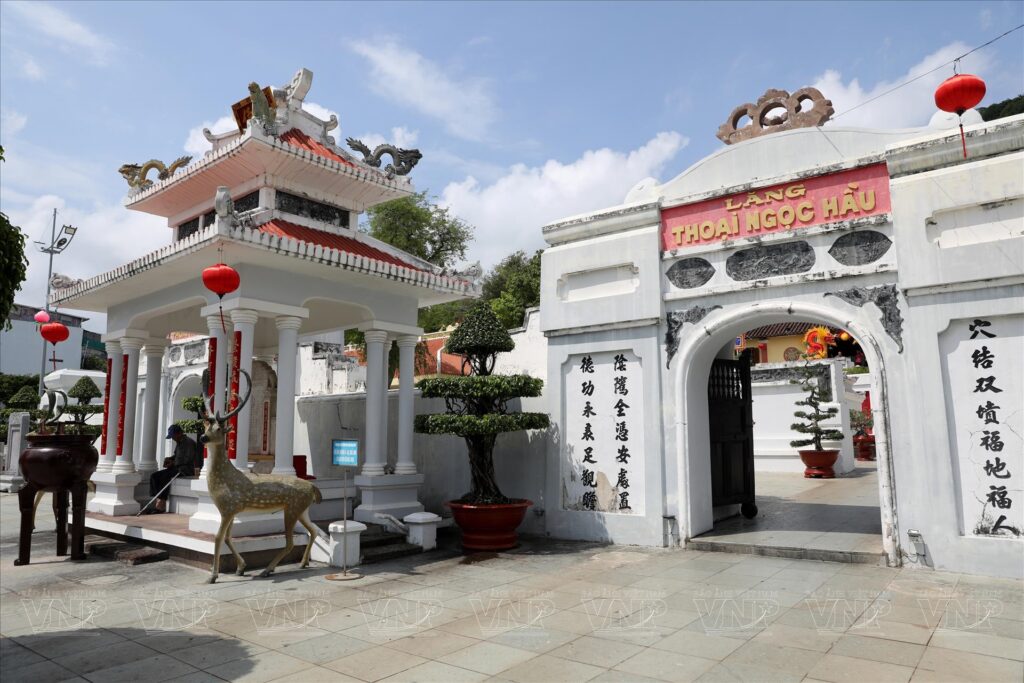
Just opposite Ba Chua Xu Temple is Lăng Thoại Ngọc Hầu, an important historical site associated with Thoai Ngoc Hau, whose real name was Nguyen Van Thoai.
Thoai Ngoc Hau was a prominent military commander and official of the Nguyen Dynasty. He played an important role in the development and defence of the southern frontier and was closely associated with the construction of the Vinh Te Canal.
The tomb complex has a more solemn atmosphere than the busy Ba Chua Xu Temple. Visitors pass through an imposing entrance and a large courtyard before reaching the burial area.
The tomb of Thoai Ngoc Hau stands in the centre, with the tombs of his two wives on either side. The site also contains historical inscriptions and architectural details that help tell the story of the region during the Nguyen Dynasty.
For travelers interested in Vietnamese history, this is one of the most worthwhile stops around Sam Mountain.
(Source: Vietnam News Agency (VNA))
3. Tay An Pagoda
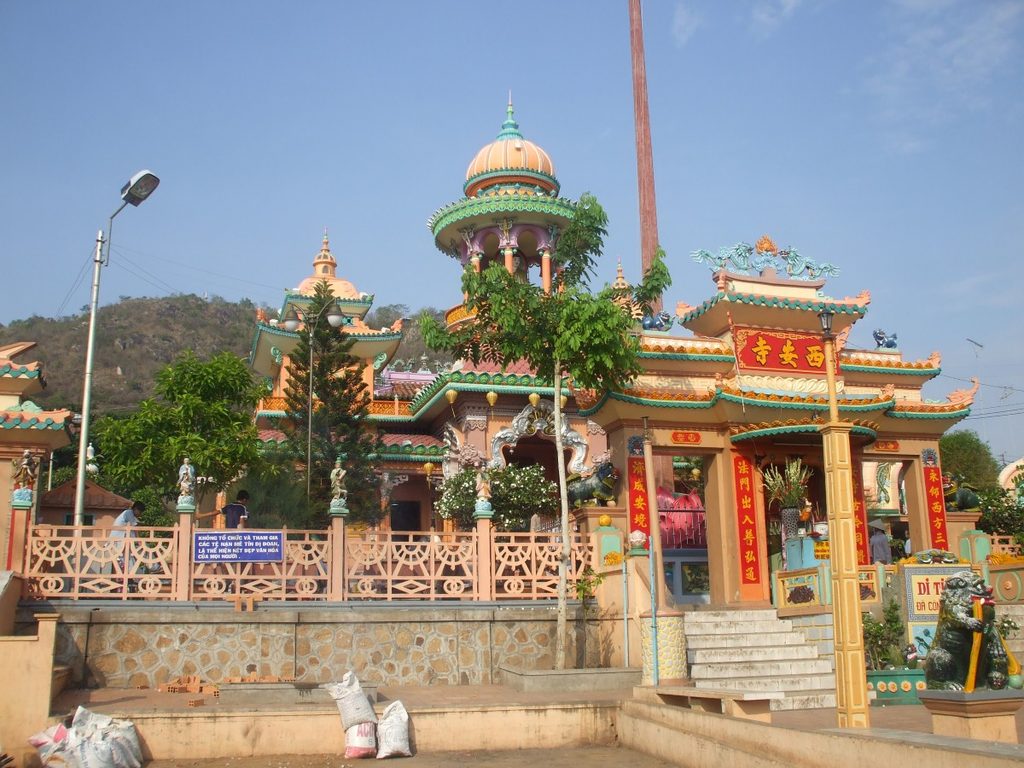
A short distance from Ba Chua Xu Temple, Tây An Cổ Tự is another important religious site at the foot of Sam Mountain.
Tay An Pagoda is especially interesting for its distinctive architectural style. The temple combines Vietnamese Buddhist architecture with influences associated with Indian and Islamic architectural traditions, creating an appearance that is quite different from many other pagodas in southern Vietnam.
The main hall is surrounded by courtyards and traditional decorative elements, while the entrance features a large three-gate structure.
The pagoda is also connected with Phat Thay Tay An, a respected religious figure in the local history of the region.
If you are visiting the three main sites around the foot of Sam Mountain, Tay An Pagoda is an easy addition to the route.
(Source: Lao Dong Newspaper)
4. Hang Pagoda – Phuoc Dien Pagoda
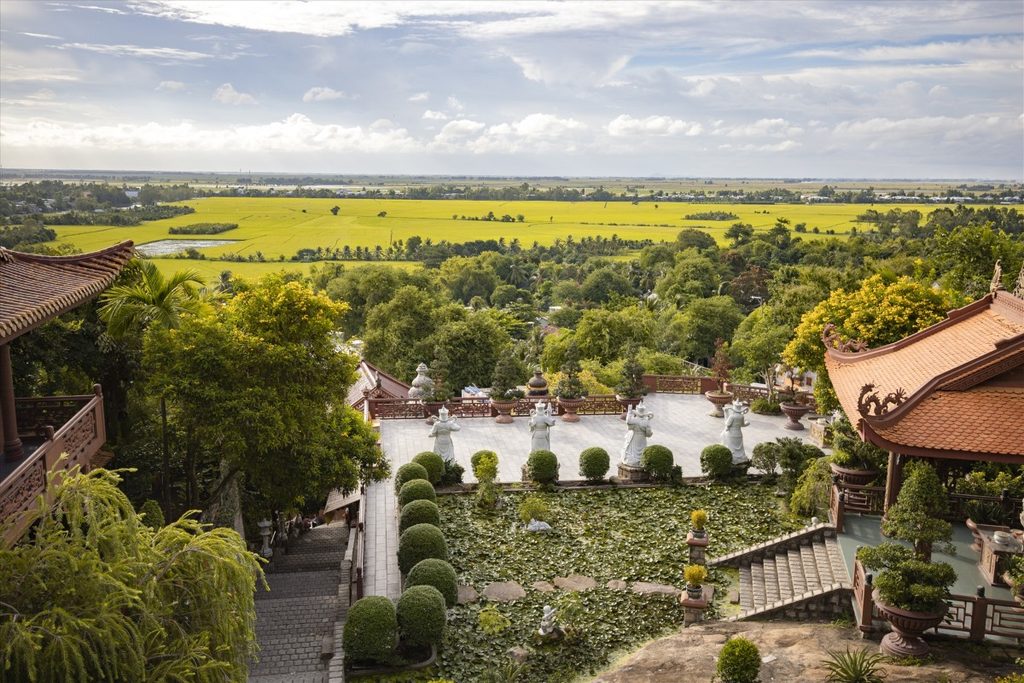
Further up the slopes of Sam Mountain, Phước Điền Tự - Chùa Hang is commonly known as Hang Pagoda, or Cave Pagoda.
The pagoda was developed in the mid-19th century and is closely associated with the story of a woman named Le Thi Tho, who is said to have chosen the quiet mountain slopes as a place for religious practice. According to local legend, two snakes lived in a cave near her retreat and eventually became associated with the protection of the pagoda.
The pagoda is built into the mountain slope, with stairways, gardens and peaceful spaces surrounded by greenery.
Compared with the busier temples at the foot of the mountain, Hang Pagoda generally feels more secluded. It is a good place to slow down, enjoy the surroundings and experience the quieter side of Sam Mountain.
The climb also gives visitors opportunities to look back towards the surrounding countryside.
(Source: Lao Dong Newspaper)
5. Sam Mountain Viewpoints
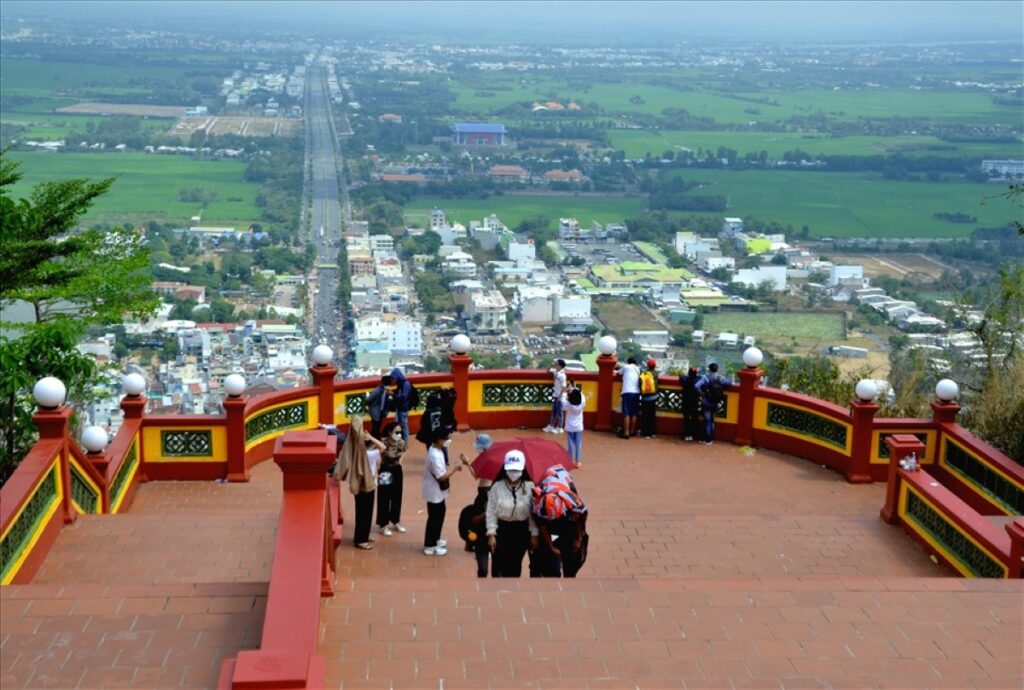
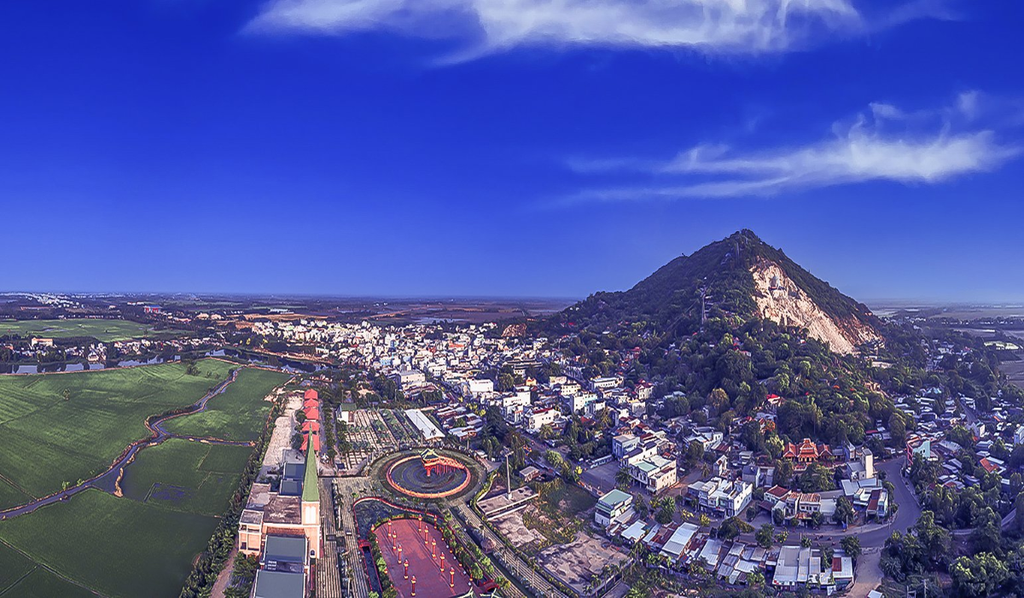
One of the reasons to explore Sam Mountain is not only the temples but also the views.
Because the mountain rises above the surrounding Mekong Delta plain, higher areas offer views across rice fields, canals and rural settlements.
One historic viewpoint is the Fortress (Phao Dai) on the summit of Sam Mountain. The site originally included a French-era villa built around the late 19th century and was later used as a military position. Although much of the original structure has been damaged, the location remains interesting for its panoramic views.
The road and paths leading up the mountain also pass smaller temples, shrines and other local sites.
If photography is your priority, early morning or late afternoon can be particularly pleasant, when the light is softer and the countryside has a more atmospheric appearance.
(Source: Du lich Nui Sam)
6. Vinh Te Canal and the Countryside Around Sam Mountain
After visiting the religious sites, take some time to look beyond the mountain itself.
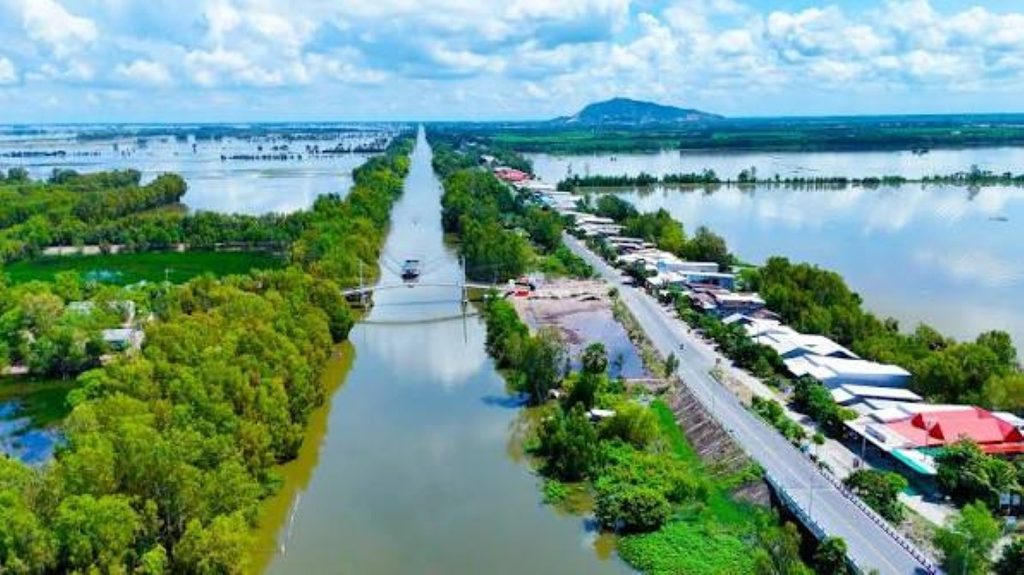
The Vinh Te Canal runs near Sam Mountain and is an important part of the history of Chau Doc and the southwestern border region. The canal is associated with the work of Thoai Ngoc Hau and was an important infrastructure project during the Nguyen Dynasty.
The surrounding countryside offers a completely different experience from the temple area. Rice fields, palm trees, waterways and small villages stretch across the flat landscape.
For travelers arriving from other parts of the Mekong Delta, this contrast is one of the most memorable aspects of visiting Chau Doc: a small sacred mountain rising dramatically from an otherwise flat agricultural landscape.
(Source: People’s Committee of An Giang Province)
How to Visit Sam Mountain
Most travelers visit Sam Mountain as part of a Chau Doc itinerary.
A typical visit can combine:
- Ba Chua Xu Temple
- Thoai Ngoc Hau Tomb
- Tay An Pagoda
- Hang Pagoda
- Sam Mountain viewpoints
The first three sites are located close together around the foot of the mountain, while Hang Pagoda is higher on the slopes.
If you have limited time, the main temples and historical sites can be explored in a few hours. Travelers with more time can continue higher up the mountain and combine the visit with other attractions around Chau Doc.
Best Time to Visit Sam Mountain
Sam Mountain can be visited throughout the year, but weather conditions can affect the experience.
The dry season is generally more convenient for sightseeing, particularly if you plan to walk between sites or explore higher parts of the mountain.
If you want to experience the area's religious atmosphere at its busiest, consider visiting during major local festivals. The Ba Chua Xu Festival is one of the most important religious events in the region and attracts large numbers of pilgrims. The festival was inscribed by UNESCO on the Representative List of the Intangible Cultural Heritage of Humanity in 2024.
Outside festival periods, the temples are generally less crowded, making it easier to explore at your own pace.
How Much Time Do You Need?
For a quick introduction to Sam Mountain, 2–3 hours is enough to visit the major sites around the foothills.
If you want to include Hang Pagoda, viewpoints and more time for photography, allow half a day.
A full day around Chau Doc allows you to combine Sam Mountain with other local experiences, such as visiting the Mekong riverside, floating villages or nearby natural attractions.
Local Tips for Visiting Sam Mountain
Dress respectfully. Sam Mountain is an important religious area, so clothing that covers the shoulders and knees is recommended when entering temples and pagodas.
Bring water. Some parts of the mountain involve stairs or walking, particularly around Hang Pagoda and higher viewpoints.
Start early. Morning visits are more comfortable in the Mekong Delta heat and can offer better conditions for photography.
Take your time. The main attraction is not simply checking off temples. Pay attention to the incense, offerings, architecture and everyday activities of local visitors.
Combine culture with nature. Sam Mountain is most interesting when you experience both sides of the destination — its temples and history as well as the surrounding Mekong countryside.
Is Sam Mountain Worth Visiting?
For travelers staying in or passing through Chau Doc, Sam Mountain offers an opportunity to experience a side of the Mekong Delta that is very different from the region's famous floating markets and boat tours.
The combination of religious traditions, Nguyen Dynasty history, distinctive architecture and countryside views makes the mountain an important cultural stop in southern Vietnam.
Rather than treating Sam Mountain as a single attraction, think of it as a small cultural landscape made up of temples, tombs, mountain paths and rural scenery.
If your Mekong Delta journey continues towards Chau Doc and the Cambodian border, spending a few hours exploring Sam Mountain can add a deeper local dimension to the trip.
Discover Sam Mountain with a Local Guide
Sam Mountain is more than a collection of temples. It is a place where the history, beliefs and everyday life of the Mekong Delta come together.
Whether you visit for the first time or return to explore the region more slowly, take time to look beyond the main attractions and discover the local stories behind them.
Planning a Mekong Delta journey that includes Chau Doc? Explore the region with a locally designed itinerary and experience the Mekong Delta beyond the usual tourist routes.