
A Region Woven with Creativity and Tradition
The Mekong Delta isn’t just a land of rivers and orchards — it’s a region rich in creativity, craftsmanship, and living traditions passed down through generations.
Here, art is not found in galleries or museums but in the hands of local artisans who transform simple, natural materials into objects of beauty and meaning.
From coconut crafts in Ben Tre to Khmer silk weaving in Tra Vinh and Soc Trang, every product tells a story — of resilience, culture, and a deep connection to the land.
Coconut Art in Ben Tre: Beauty from Nature
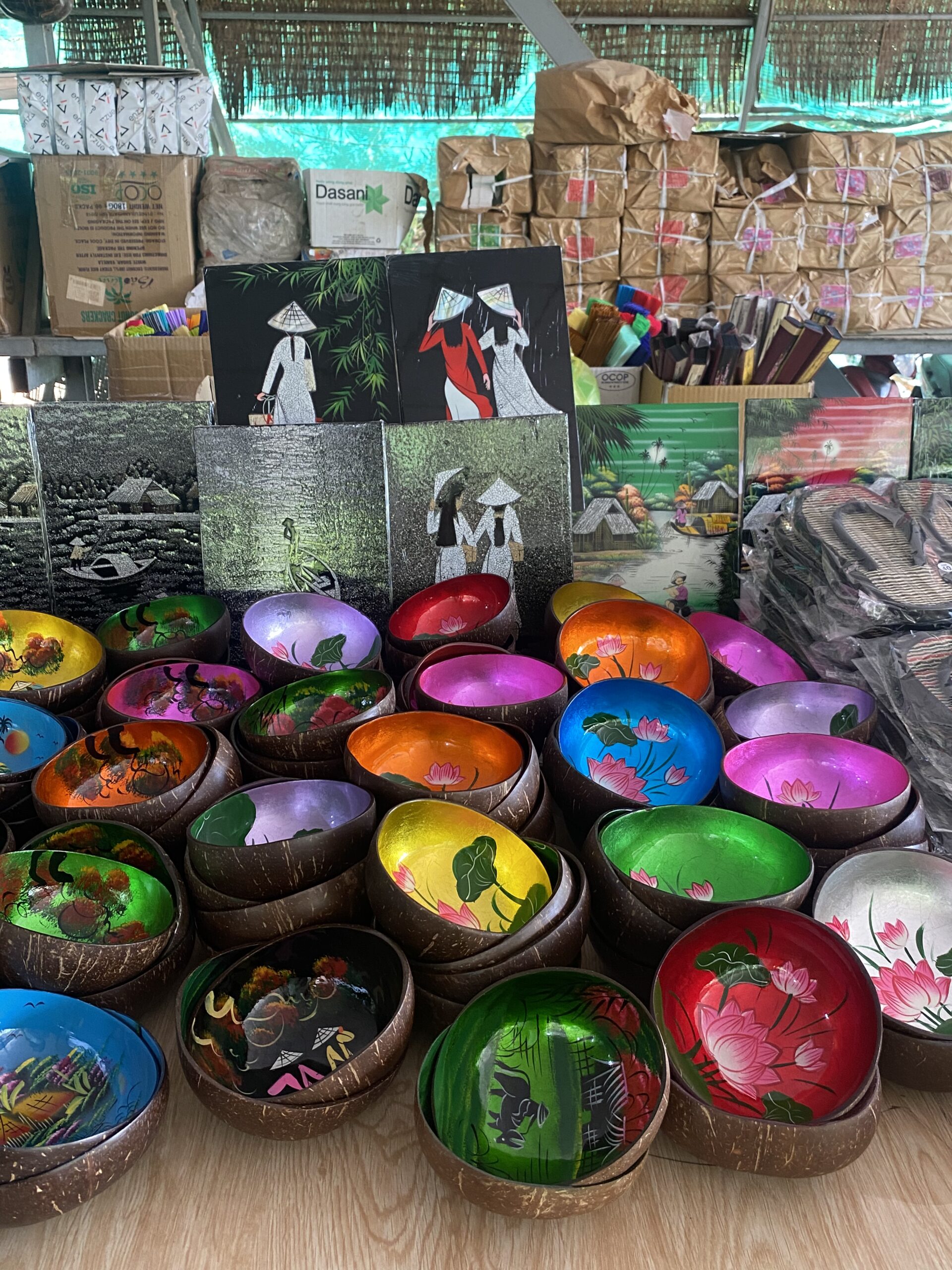
Known as Vietnam’s “Coconut Kingdom,” Ben Tre is a place where nothing from the coconut tree goes to waste.
The shells, leaves, husks, and wood are turned into beautiful handicrafts — bowls, lamps, jewelry, and decorative pieces — each shaped by skilled local hands.
Cycling through the countryside, you’ll often hear the rhythmic tapping of artisans carving coconut shells in small family workshops. Their creativity turns humble materials into souvenirs that reflect the soul of the Mekong — natural, practical, and full of life.
Visitors can join short workshops to learn how to make small coconut souvenirs, offering a hands-on way to connect with the local way of life.
Every item you take home carries a bit of Ben Tre’s warm sunlight and river breeze.
Traditional Weaving in Khmer Communities
Further south, in Tra Vinh and Soc Trang, the Mekong’s Khmer communities keep another ancient craft alive — silk and cotton weaving.
In quiet village homes, you can still find wooden looms where women patiently weave intricate patterns that reflect Khmer beliefs, mythology, and daily life.
Each scarf, sarong, or decorative textile is a work of art. The colors are bold yet harmonious — often dyed with natural ingredients like indigo leaves, jackfruit wood, or mangosteen skins.
The craft is more than a livelihood; it’s a way of preserving identity and passing cultural stories from one generation to the next.
Travelers visiting these areas are often welcomed into weaving households, where artisans are proud to share their techniques and heritage. Watching their work is like watching history being woven before your eyes.
Other Local Crafts Worth Discovering
The Mekong Delta is a treasure chest of local crafts beyond coconut and weaving.
In Vinh Long, pottery villages produce warm, earthy ceramics using river clay, while Can Tho and Long An are known for bamboo and water hyacinth crafts.
Each village specializes in a different material, showing how people have learned to live in harmony with the region’s natural abundance.
These crafts not only sustain families but also keep age-old knowledge alive in a rapidly modernizing world. Buying a handmade product here means supporting local artisans and preserving the region’s living culture.
A Journey into the Heart of Local Life
Exploring the Mekong’s handicrafts is more than a shopping trip — it’s a cultural journey.
You’ll meet artisans who proudly continue their ancestors’ work, using traditional techniques yet adapting to modern tastes.
You’ll see how the river, the land, and the people are intertwined in every creation.
Whether it’s the shine of a polished coconut bowl or the delicate weave of a Khmer scarf, each piece is a reflection of the Mekong spirit — simple, soulful, and timeless.
Tips for Travelers
- Where to go: Ben Tre for coconut crafts, Tra Vinh and Soc Trang for Khmer weaving, Vinh Long for pottery.
- What to do: Join a handicraft workshop or visit artisan villages.
- Best time to visit: December to April, during the dry season.
- Travel tip: Buy directly from artisans or cooperatives to support local families and fair trade.
The Mekong Delta’s handicrafts capture the essence of life along the river — creative, resilient, and deeply connected to nature.
By visiting these artisan communities, you’re not just collecting souvenirs; you’re collecting stories, traditions, and moments of genuine human connection.
Every handmade piece is a reminder that in the Mekong, beauty isn’t manufactured — it’s crafted with heart, history, and the gentle rhythm of the river.