Flowing gently through the southern plains of Vietnam, the Mekong River is more than just a waterway — it’s the lifeline of an entire region. Known as the “River of Nine Dragons,” the Mekong nourishes vast rice fields, lush fruit orchards, and vibrant floating markets that define the charm of the Mekong Delta.
Life here flows to the rhythm of the river. From sunrise boat markets to tranquil canals lined with coconut palms, every moment reveals a unique culture deeply connected to water.
1. The Heartbeat of the Mekong Delta
The Mekong River enters Vietnam from Cambodia and splits into nine branches before meeting the sea, forming the vast delta region known as Đồng bằng Sông Cửu Long.
Home to more than 17 million people, this fertile land is Vietnam’s “rice bowl” — producing nearly half of the country’s rice and much of its tropical fruit and seafood.
But beyond its agricultural abundance, the river is also a cultural thread that weaves together countless communities who have adapted to life on and around water for centuries.
2. Daily Life on the Water
In the Mekong Delta, roads are often replaced by waterways. Locals commute, trade, and even go to school by boat. Early in the morning, rivers come alive with wooden sampans carrying goods — from coconuts and pineapples to handmade crafts and flowers.
For many families, the boat is both home and workplace. Fishermen cast nets at dawn, women cook breakfast in floating kitchens, and children wave from decks as they drift to floating schools.
This water-centered lifestyle may seem simple, but it reflects generations of resilience, adaptability, and harmony with nature.
3. Floating Markets: The Soul of the Mekong
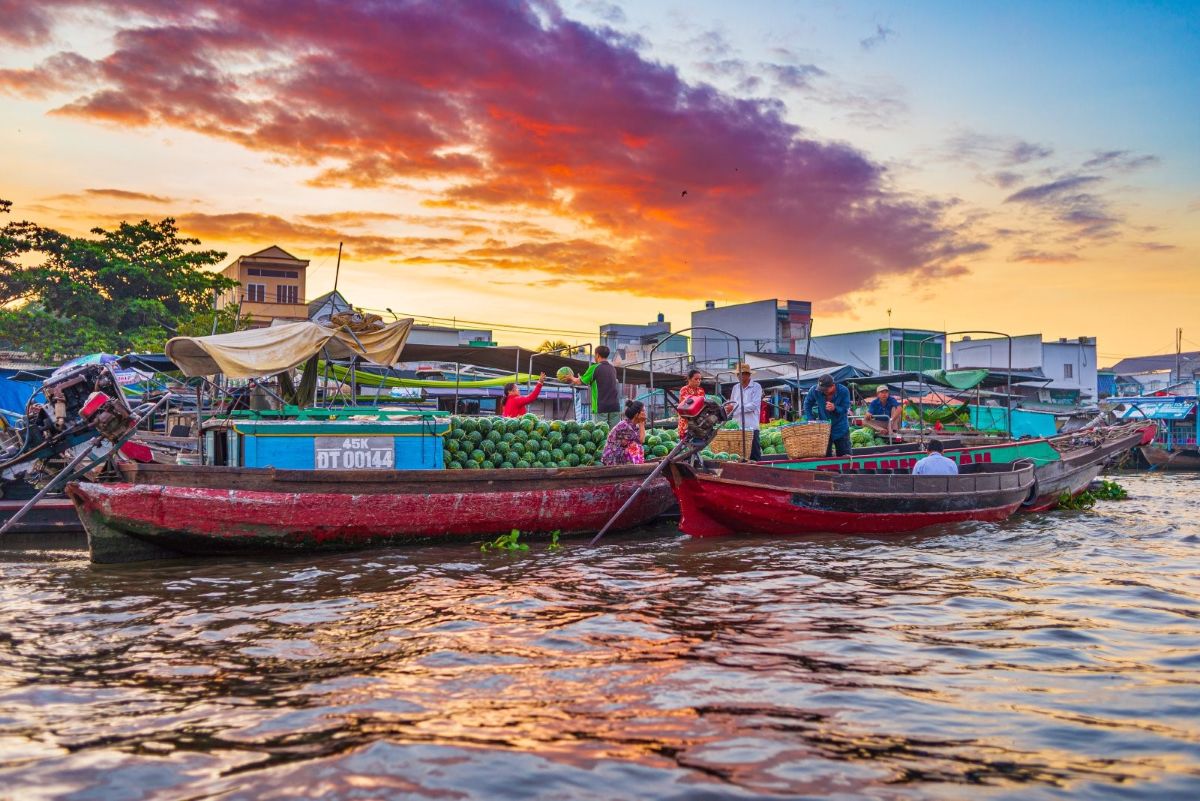
No journey through the Mekong Delta is complete without visiting its floating markets — bustling hubs of commerce and culture.
- Cai Rang Floating Market (Can Tho): The largest and most famous, where hundreds of boats gather before sunrise to trade fresh produce. Sellers display their goods on long bamboo poles — a traditional “advertising” method unique to the delta.
- Phong Dien Market: Smaller and more local, offering a glimpse of authentic river life.
- Long Xuyen or Nga Bay Markets: Less crowded alternatives for travelers seeking off-the-beaten-path charm.
Visiting these markets by boat lets travelers experience the heartbeat of the Mekong — where laughter, trade, and tradition float together under the morning sun.
4. The River’s Role in Culture and Belief
For people of the Mekong Delta, water isn’t just a resource — it’s sacred.
Local festivals and customs reflect gratitude to the river for its blessings:
- Ooc Om Bok (Moon Offering Festival): Celebrated by the Khmer community, honoring the moon and water spirits for a bountiful harvest.
- Nghinh Ong Festival: Fishermen pray for calm seas and good catches.
- Waterway Weddings and Floating Pagodas: Traditional ceremonies that beautifully blend spirituality with river life.
Through these rituals, the Mekong remains not only a physical lifeline but also a spiritual one, deeply rooted in local identity.
5. Ecotourism and Sustainability
As tourism grows, protecting the delicate ecosystem of the Mekong has become crucial.
Visitors can support sustainable travel by:
- Choosing eco-friendly homestays that minimize waste and support local families.
- Joining community-based tours that promote environmental education.
- Avoiding single-use plastics and respecting local customs.
Many local guides and villagers are now part of eco-initiatives that balance tourism with conservation — ensuring that the Mekong’s beauty and traditions are preserved for generations to come.
6. Top Experiences for Travelers
If you’re planning a trip to the Mekong Delta, here are a few unmissable experiences:
- Take a sunrise boat tour at Cai Rang or Phong Dien Floating Market.
- Stay overnight in a riverside homestay in Ben Tre or Vinh Long.
- Cycle through countryside villages under coconut trees and over monkey bridges.
- Visit craft villages, such as coconut candy workshops and rice paper makers.
- Explore Tra Su Cajuput Forest or Chau Doc’s floating fish farms.
Each experience offers a closer connection to the river’s gentle pace and the people who depend on it.
7. The Ever-Changing Yet Timeless Mekong
Despite modernization, the essence of Mekong life endures — humble, generous, and deeply tied to nature.
The river continues to inspire songs, poems, and stories about love, labor, and belonging.
As the world changes, so too does the Mekong — yet it remains a place where travelers can rediscover a slower rhythm of life and the timeless beauty of human connection with water.
The Mekong River is not just a destination — it’s an experience.
To sail its waters is to witness a living culture that thrives between tradition and change.
From floating markets and stilted houses to warm smiles and fragrant dishes, the Mekong offers a window into Vietnam’s soul — flowing endlessly, gracefully, and full of life.