The Mekong Delta is often described as the “rice bowl” of Vietnam, but agriculture here is about much more than rice.
Across this vast network of rivers, canals and fertile islands, rice fields, coconut groves and tropical fruit orchards are deeply connected to everyday life. They provide food and livelihoods, shape local traditions and influence the way communities live along the waterways.
For travelers, exploring the Mekong Delta is therefore not simply about taking a boat ride or visiting a floating market. It is an opportunity to see how agriculture and nature have shaped the culture of southern Vietnam.
Rice: The Foundation of Life in the Mekong Delta
Rice has played an essential role in Vietnamese culture for centuries, and the Mekong Delta is one of the country's most important agricultural regions.
The fertile soil and extensive network of rivers provide favorable conditions for rice cultivation. Large areas of the delta are covered by rice paddies, creating a landscape that changes throughout the year depending on the agricultural cycle.
For local communities, rice is much more than a staple food. It is an important source of income and an essential part of Vietnamese cuisine and culture.
Travelers visiting the countryside may see farmers working in the fields, transporting rice or preparing the land for another growing season.
These simple scenes offer a glimpse into a traditional way of life that remains closely connected to the land.
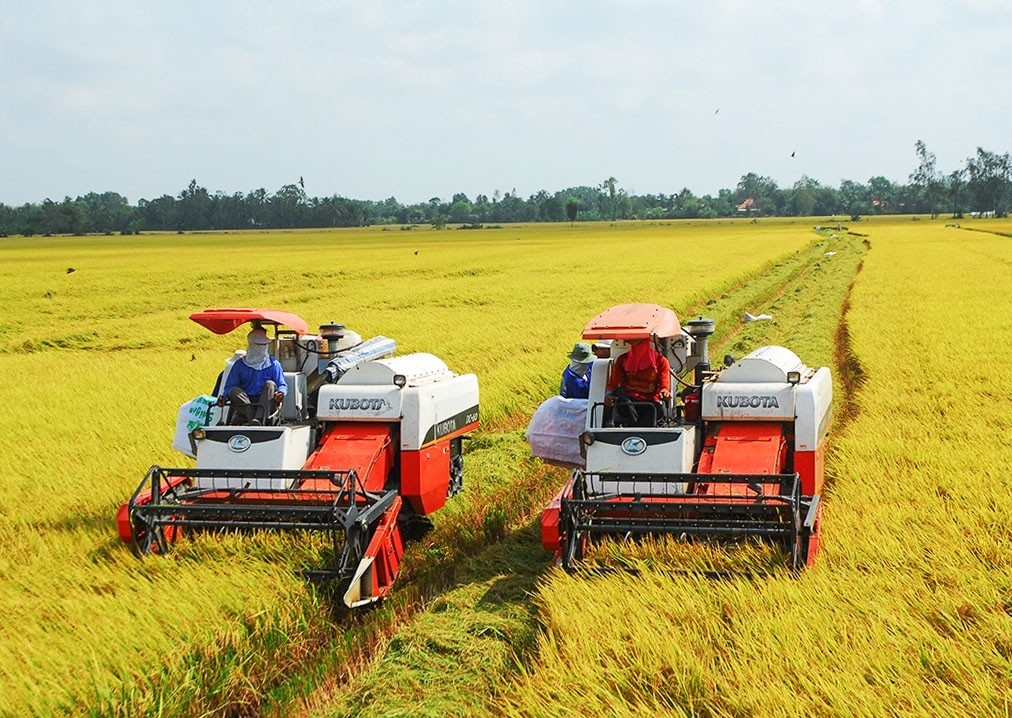
(Source: Electronic Magazine of Environment and Economy)
Coconut: The Symbol of Ben Tre
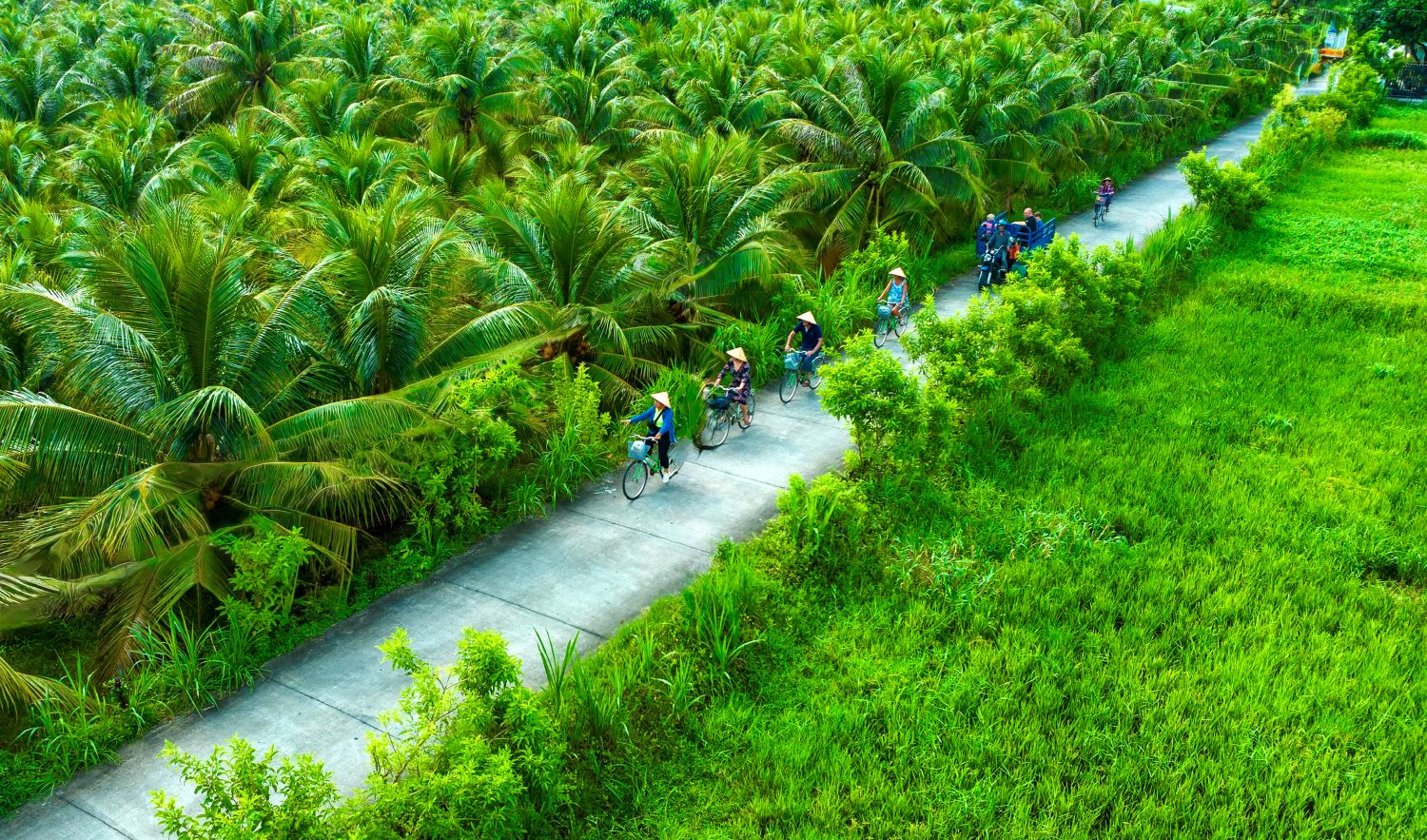
If rice represents the agricultural foundation of the Mekong Delta, coconut is particularly associated with Ben Tre.
Often known as the “Coconut Kingdom,” Ben Tre is famous for its extensive coconut plantations growing along rivers and canals.
Coconut trees are an important part of local life because almost every part of the coconut can be used.
Coconut water is enjoyed as a refreshing drink, while coconut milk and coconut cream are common ingredients in southern Vietnamese cuisine.
Coconut is also used to make sweets, handicrafts, cooking products and other local goods.
A visit to a traditional coconut workshop can therefore reveal much more than how a particular product is made. It shows how local communities make use of the natural resources surrounding them.
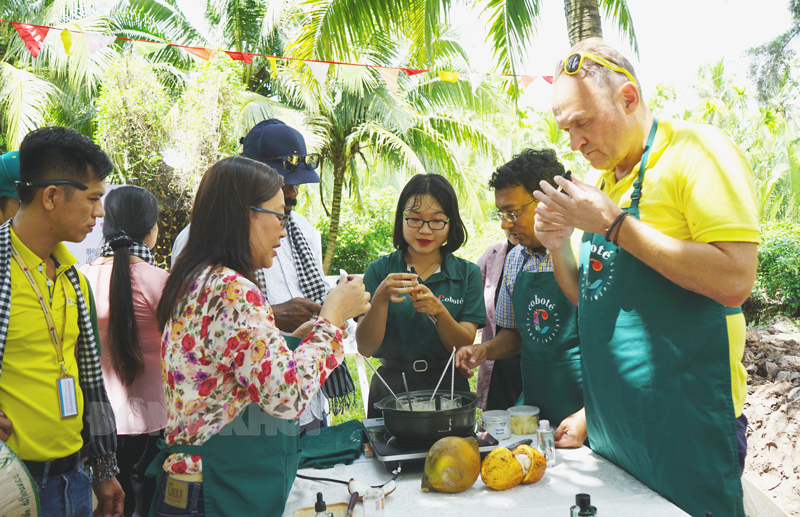
(Source: Ministry of Culture, Sports and Tourism)
Tropical Fruit: The Flavors of the Mekong
The warm climate and fertile soil of the Mekong Delta make the region ideal for growing a wide variety of tropical fruits.
Depending on the season, travelers may encounter:
- Mango
- Pomelo
- Rambutan
- Mangosteen
- Longan
- Durian
- Jackfruit
- Dragon fruit
- Coconut
Many orchards are located along smaller waterways, allowing visitors to reach them by boat before walking through the gardens.
One of the most enjoyable ways to experience the Mekong countryside is to visit a local fruit orchard, taste seasonal fruit and learn directly from local farmers about how the crops are grown.
From Farm to Table
Agriculture in the Mekong Delta is closely connected to the local food culture.
Fresh ingredients from farms, gardens and rivers often make their way directly into family kitchens and local restaurants.
Rice becomes noodles, rice paper and traditional dishes.
Coconut becomes coconut milk, sweets and savory ingredients.
Fresh tropical fruit is enjoyed on its own or incorporated into desserts and drinks.
This close connection between agriculture and cuisine is one of the reasons food experiences are such an important part of exploring the Mekong Delta.
Life Along the Rivers and Canals
Agriculture is only one part of the Mekong Delta lifestyle.
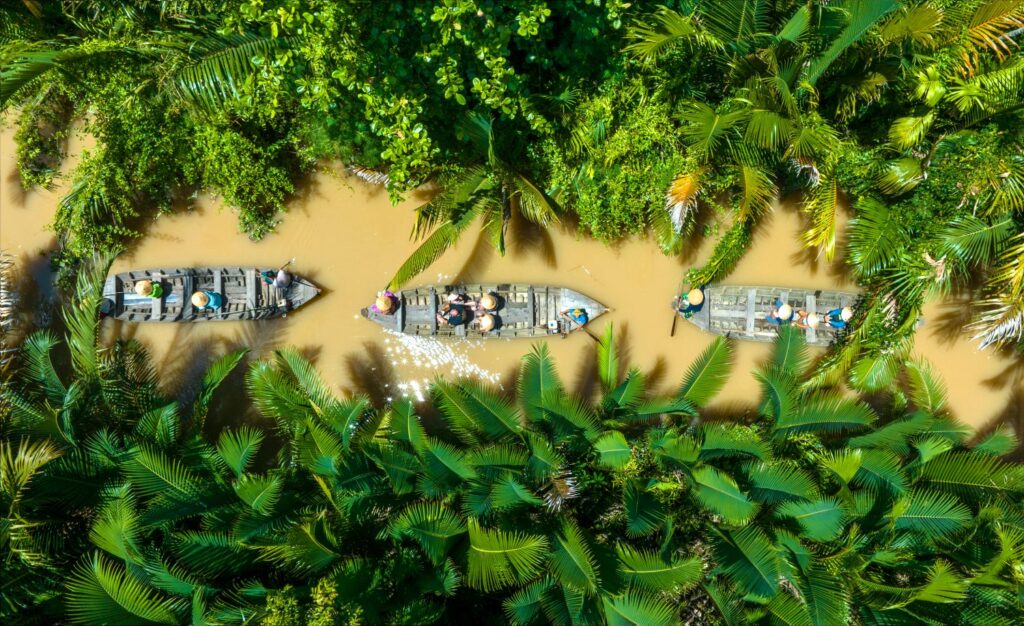
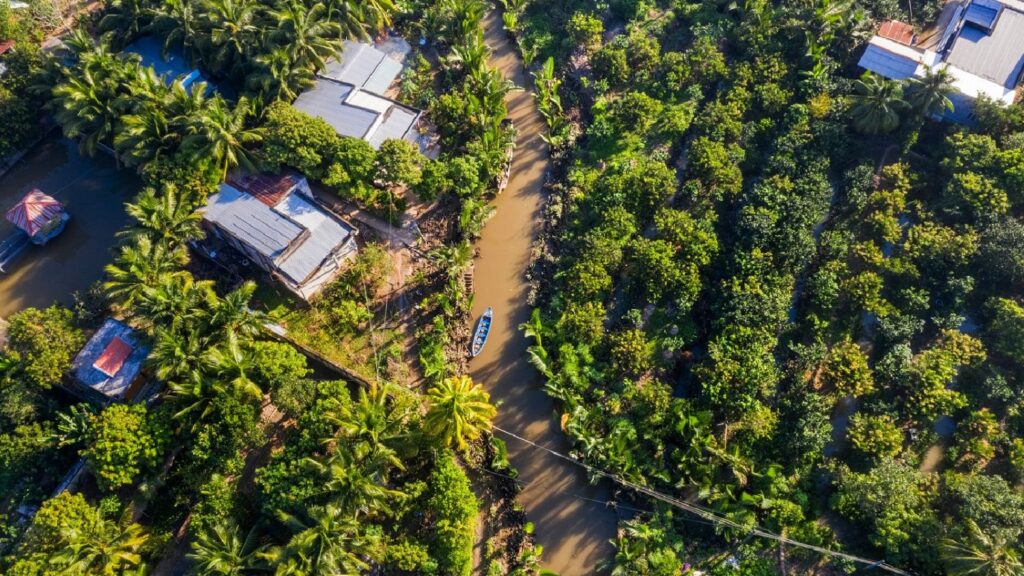
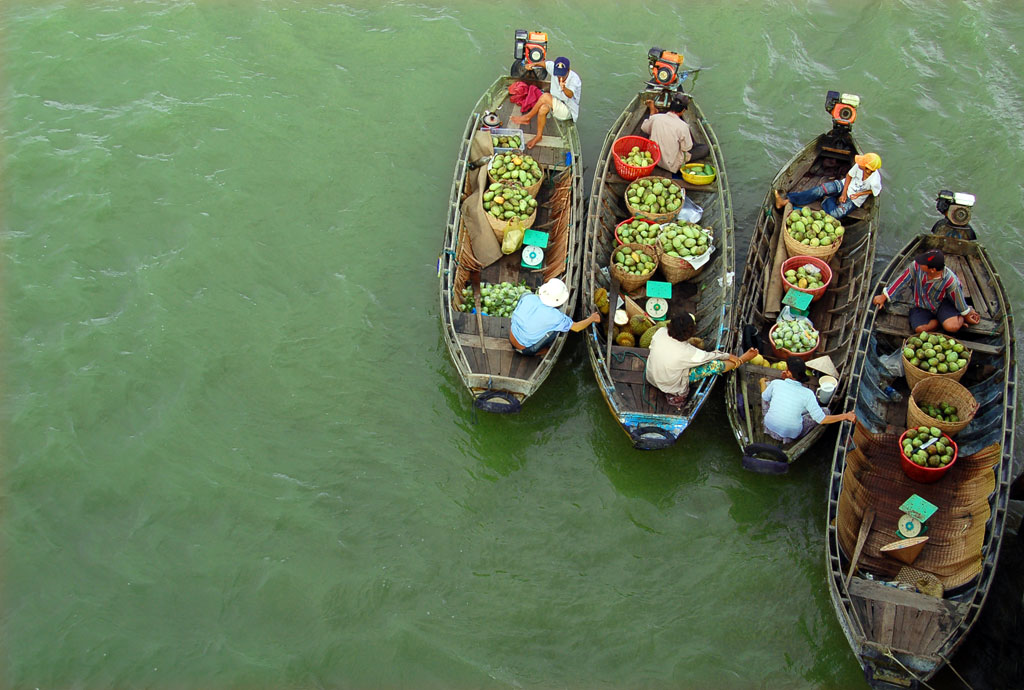
The region's rivers and canals are also essential transportation routes. Boats have traditionally been used to transport people, agricultural products and goods between villages and markets.
This relationship between land and water has shaped the region's unique way of life.
In some rural areas, houses, gardens, farms and small businesses are all connected by waterways. Early in the morning, boats begin moving along the canals while farmers and vendors prepare for another day.
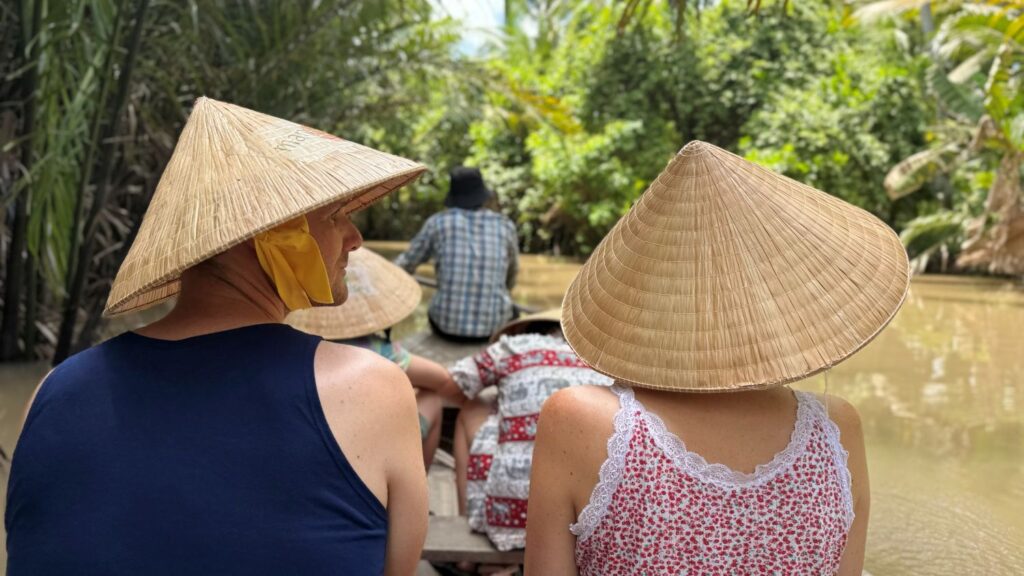
For visitors, traveling by boat offers a different perspective of the region and allows them to see daily life beyond the main roads.
How Agriculture Shapes Local Culture
The agricultural landscape of the Mekong Delta has influenced more than the local economy. It has also shaped traditions, food, architecture and community life.
Seasonal harvests influence what appears in local markets and on family dining tables.
Traditional handicrafts often make use of locally available materials such as coconut leaves, bamboo and other plants.
Local festivals and community traditions are also closely connected to agricultural life and the natural environment.
This is why visiting the Mekong Delta with a local guide can make the experience more meaningful. A landscape that may initially appear simple becomes much more interesting when you understand the stories behind it.
The Mekong Delta Beyond the Tourist Attractions
Popular attractions such as floating markets are an important part of the Mekong Delta experience, but they are only one small part of the region.
To understand the delta more deeply, travelers can explore:
- Local fruit orchards
- Coconut plantations
- Rice fields
- Traditional workshops
- Small riverside villages
- Family-run food producers
- Local markets
- Rural homes and gardens
These experiences allow visitors to see how people continue to adapt their lives to the natural environment.
Best Places to Experience Agricultural Life
Different parts of the Mekong Delta offer different experiences.
Ben Tre
Best known for coconut plantations, small canals and traditional coconut-based products.
Can Tho
A convenient base for exploring the delta and experiencing river life, particularly around the famous Cai Rang Floating Market.
Vinh Long
Known for its orchards, riverside communities and peaceful rural landscapes.
Chau Doc
Offers a different perspective of the Mekong region, with a combination of river culture, local markets and diverse communities.
When Is the Best Time to Experience the Mekong Delta?
The Mekong Delta can be visited throughout the year, but the experience changes with the seasons.
The dry season generally offers more predictable weather for outdoor activities and boat trips.
The fruit season is particularly attractive for travelers interested in visiting orchards, although different fruits are harvested at different times of the year.
Rather than focusing only on one “best” month, it is often better to choose the timing according to the type of experience you want.
A More Authentic Way to Discover the Mekong Delta
If you want to understand the Mekong Delta beyond its famous tourist attractions, slow down and spend time in the countryside.
- Take a small boat through the canals.
- Walk through a fruit orchard.
- Visit a coconut workshop.
- Talk to local farmers.
- Taste freshly harvested fruit.
- Enjoy a home-cooked meal.
These experiences reveal something that a simple sightseeing tour cannot: the Mekong Delta is a living agricultural landscape where nature, food and community remain closely connected.
Final Thoughts
Rice, coconut and tropical fruit are much more than agricultural products in the Mekong Delta. They are part of the region's identity.
They shape what people eat, how communities earn a living, what products are made locally and how daily life unfolds along the rivers and canals.
For travelers, discovering this connection offers a deeper understanding of southern Vietnam.
The Mekong Delta is not simply a destination to visit. It is a place to slow down, meet local people and experience a way of life shaped by water, fertile land and generations of agricultural traditions.