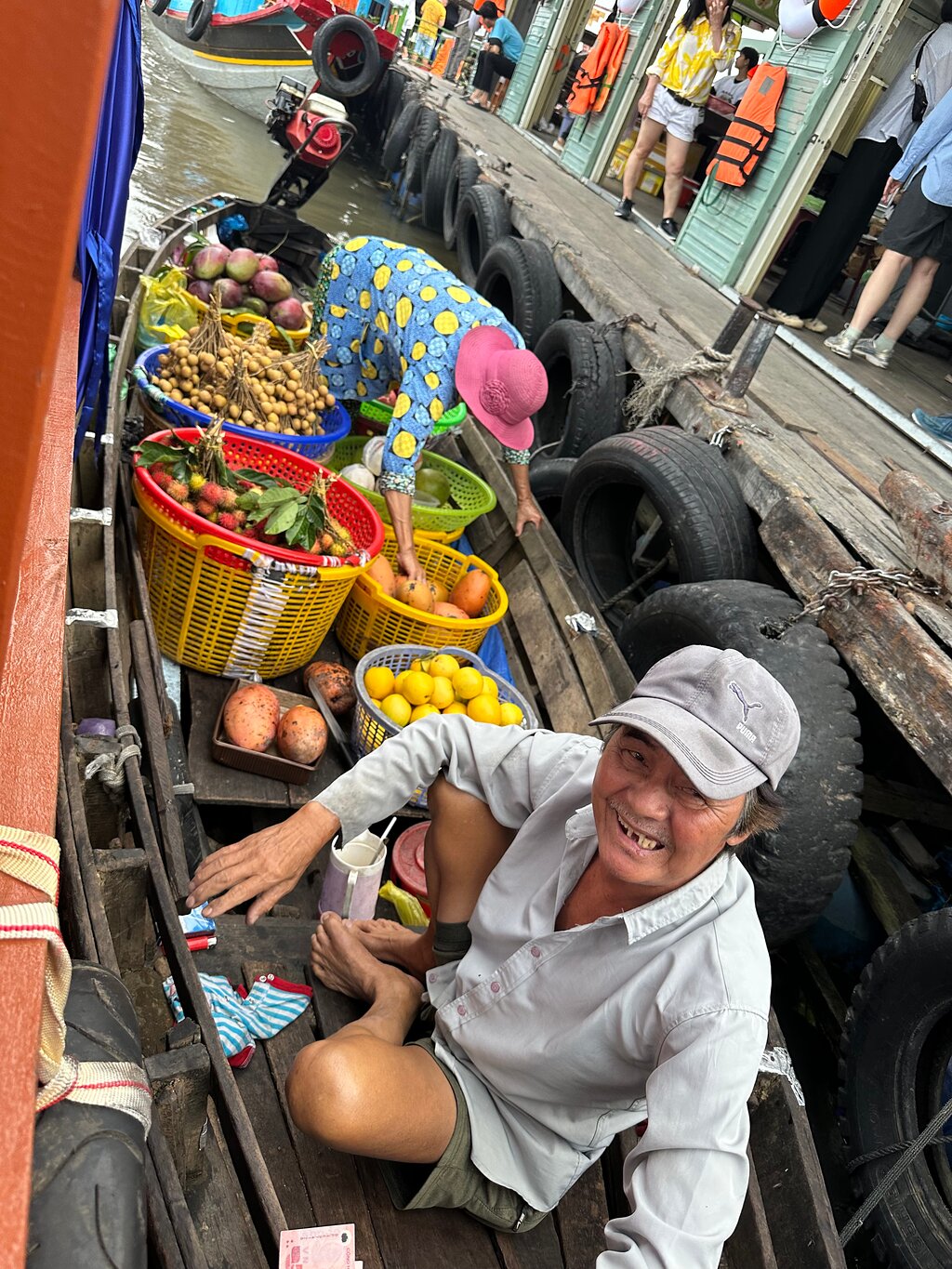
When the first rays of sunlight touch the calm waters of the Mekong River, hundreds of wooden boats begin to gather — laden with tropical fruits, steaming bowls of noodles, and the vibrant laughter of traders.
This is the Mekong Delta’s floating market, where food isn’t just a product — it’s a way of life.
A journey through the Mekong Delta is as much about taste as it is about travel. Each dish tells the story of the land and its people — simple, fresh, and full of soul.
1. The Floating Market: A Kitchen on Water
Floating markets like Cai Rang (Can Tho), Phong Dien, and Nga Bay are not just trading centers; they are floating kitchens where the best of Mekong’s cuisine comes alive.
As you cruise between boats at dawn, the air fills with the aroma of grilled pork, broth simmering over charcoal stoves, and freshly cut fruits.
Vendors skillfully balance on narrow boats while serving steaming bowls of noodles to hungry travelers.
What makes these floating meals special is not only their flavor — it’s the experience of sharing breakfast with locals, surrounded by the rhythm of the river.
2. Signature Dishes You Must Try
• Hu Tieu (Mekong Noodle Soup):
This beloved dish has a clear, sweet broth made from pork bones and dried shrimp. Topped with sliced pork, quail eggs, and crispy garlic, it’s the go-to breakfast for locals at Cai Rang Market.
• Bun Rieu (Crab Noodle Soup):
A colorful dish featuring fresh crab paste, tomatoes, tofu, and rice noodles. It perfectly captures the Mekong’s balance of richness and freshness.
• Com Tam (Broken Rice):
Often sold on small boats, this humble meal features grilled pork, shredded pork skin, and a fried egg — served with fish sauce and pickles.
• Banh Xeo (Crispy Vietnamese Pancake):
A thin, golden pancake stuffed with shrimp, pork, and bean sprouts. In the Mekong, locals wrap it in lettuce leaves and dip it into homemade fish sauce.
• Fresh Tropical Fruits:
Try the star apple of Vinh Kim, Cai Be’s longan, Ben Tre’s coconuts, and My Tho’s mangos — each with its own sweetness shaped by the fertile alluvial soil of the delta.
3. A Taste of Tradition and Hospitality
In the Mekong Delta, meals are more than food — they are acts of hospitality.
Locals often invite travelers into their homes or boats for a simple meal, served with stories about the river, the harvest, or family life.
Meals are prepared with what’s available — freshly caught fish, vegetables from the garden, and herbs grown along the riverbanks. Every bite reflects the Mekong people’s creativity and resourcefulness.
4. Cooking Classes and Homestay Dining Experiences
For travelers who want to go beyond tasting, joining a cooking class at a local homestay is a must.
You can visit a riverside market to buy ingredients, then learn to cook traditional dishes like Banh Xeo, Canh Chua Ca Linh (sour fish soup), or Kho To (caramelized fish in clay pot).
Some of the best cooking experiences are found in:
- Ben Tre: Known for dishes made with coconut and river shrimp.
- Vinh Long: Offers authentic family-run homestays with traditional meals.
- Can Tho: Ideal for combining floating market visits with local cooking workshops.
These hands-on experiences connect travelers with the real Mekong lifestyle — slow, flavorful, and full of heart.
5. The Ingredients of the Delta
The secret behind the Mekong Delta’s cuisine lies in its abundance of fresh ingredients.
- Fish and seafood come directly from rivers and canals.
- Rice and sticky rice grow in endless paddies.
- Coconut, banana, and herbs flourish year-round.
The result is a cuisine that’s light, aromatic, and naturally sweet — a true reflection of the land’s generosity.
6. Sweet Treats of the Mekong
No culinary journey is complete without tasting the region’s famous desserts:
- Bánh da lợn (layered pandan cake) — soft, chewy, and fragrant.
- Chuối nướng (grilled banana in sticky rice) — a street food favorite.
- Kẹo dừa (coconut candy) — a signature souvenir from Ben Tre.
- Chè đậu (sweet bean dessert) — served cold, perfect for the tropical climate.
These sweets are often homemade and sold from small boats or local family shops — simple pleasures that stay with you long after you’ve left the delta.
7. Responsible and Authentic Food Travel
To experience the Mekong Delta’s cuisine responsibly:
- Support local vendors and family-run eateries rather than large tour operators.
- Avoid wasting food and plastic packaging.
- Ask before taking photos — a small act of respect that goes a long way.
Eating in the Mekong isn’t just about satisfying hunger — it’s about celebrating a culture that thrives on kindness, connection, and community.
A culinary journey through the Mekong Delta is an invitation to slow down and savor the essence of southern Vietnam.
From the lively floating markets to humble family kitchens, every dish tells a story — of the land, the river, and the warm-hearted people who call it home.
So next time you sip a bowl of noodle soup while drifting along the river, remember — you’re tasting centuries of tradition, cooked gently by the hands of the Mekong.